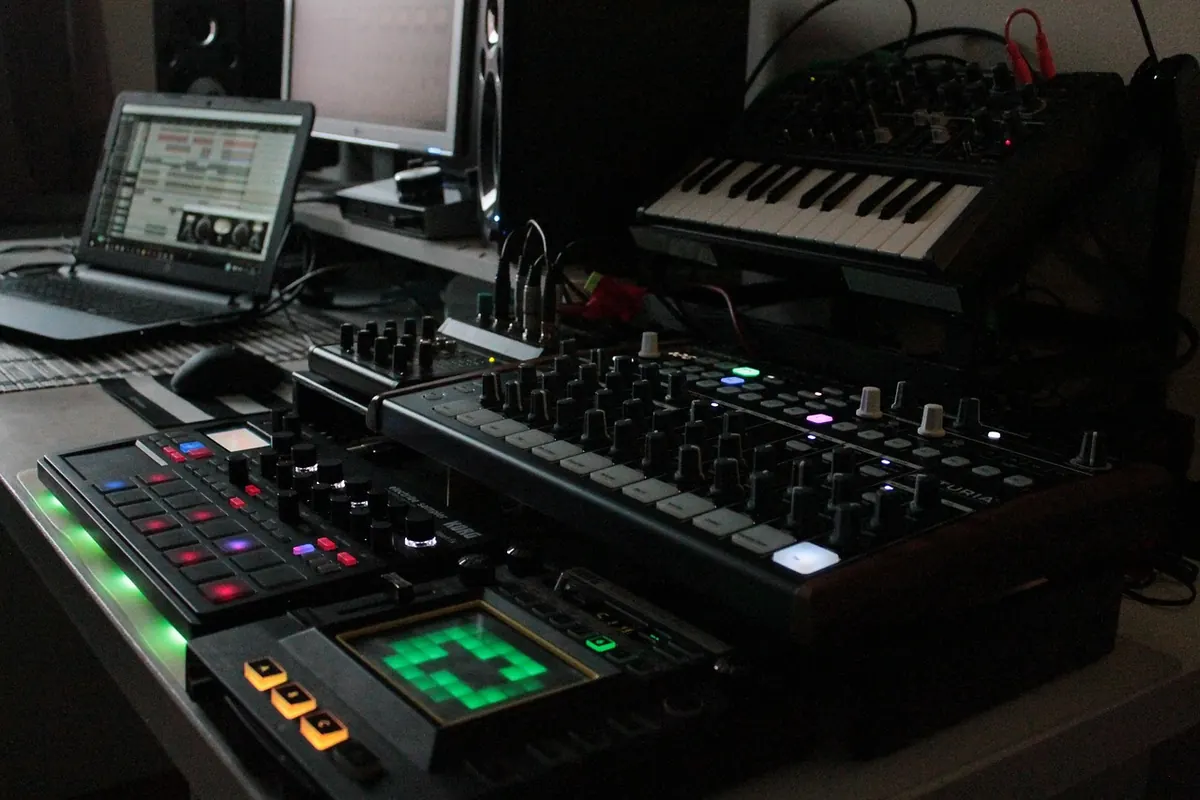
There's a particular kind of January evening in a home studio. It's half four, the light has already gone, the radiator is ticking and you've got two clear hours. You open a project called untitled47, stare at eight bars of a loop you don't remember making, audition kick samples for ninety minutes, then close the laptop with nothing to show for it.
That isn't a discipline problem. The weeks after Christmas are genuinely hard going for creative work: less daylight, tighter money, and the flat feeling that follows a deadline you were sprinting towards in December. The answer isn't to work harder. It's to lower the entry point and give the week a shape.
Why January drains the studio
Three things tend to collide. First, the pressure release: if you spent November and December finishing a release, a remix or a uni deadline, your brain is owed a rest and it will take one whether you schedule it or not. Second, the short days skew your sense of time. It feels like midnight at six o'clock, so you either crash early or push through to two in the morning and wreck the next day. Third, the "fresh start" trap: new template, new plugin bundle, new genre, new alias. Big intentions are fragile. They collapse the first time you're tired, which in January is most evenings.
So plan for the version of yourself that turns up at 9pm with cold hands and half a brain. That version can still make music. It just can't start from a blank page.
Build a rhythm, not a resolution
A resolution is all-or-nothing. A rhythm is repeatable. Fix three slots a week — say Tuesday, Thursday and Sunday, 8pm to 8:45pm — and treat them as the backbone of the winter. Forty-five minutes is enough to get somewhere if you know what you're doing when you sit down.
The trick that makes this work is ending every session mid-thought. Before you close the project, write yourself one plain instruction for next time: "try the bass an octave down", "chop the second loop, keep the first", "record the vocal with the SM58 rather than the condenser". It sounds trivial. It means you never sit down facing a blank page again.
Keep a session log as well. One line, every time: date, what you did, what's next. After a fortnight you'll have evidence that you're moving, which matters more in January than any amount of motivation.
The daily prompt habit
Alongside the three weekly slots, add a short daily prompt. Ten minutes. It's not there to produce anything good — it's there to keep your hands on the gear so the weekly sessions don't feel like starting from cold.
Rules for a prompt session: one sound source, no mixing, nothing saved over an existing project, and a hard stop when the timer goes. Render it, name it with the date and forget it. A dull prompt you actually did beats a brilliant one you thought about.
Ten prompts to rotate
- Chop a single drum break by hand and make a full loop from nothing else.
- Record rain on the window, pitch it down an octave and build a pad from it.
- Write something at 70 BPM where the four-bar loop never changes.
- Take your oldest unfinished project and rework only the drums.
- Compose with three notes. No chords allowed.
- Build a track around a sound you dislike: a fridge hum, a squeaky gate, a printer.
- Slow one of your own tracks to half speed and remix it.
- Hum a melody, record it on your phone, and treat it as a synth line.
- Make a one-minute piece with no kick drum at all.
- Rebuild the groove of a track you love using only one-shots you already own.
Rotate them in order rather than choosing whichever appeals. The choosing is where the hour disappears.
Projects that suit the dark months
Five one-minute tracks
Short, finishable, and the deadline is close enough to matter. One minute forces decisions: what's the idea, where does it go, when does it stop. Put them out as a small collection in February or keep them as a sketchbook. Either is fine.
A rework project
Dig out stems from two or three years ago and rebuild one properly. You already like the material, so half the creative work is done, and the technical work — cleaning, gain staging, arrangement — is exactly what tired evenings can handle.
Build a kit from your own recordings
Spend three low-energy sessions making a drum kit and a pad set out of sounds you've recorded yourself: kitchen taps, footsteps on gravel, keys, a mug on a wooden desk. It's admin that still counts as music, and by March you'll have a palette nobody else has.
A study, not a release
Pick a track you admire and rebuild its arrangement from scratch — same structure, same instrument roles, your own sounds. Nothing to release, nothing to promote, just an exercise in seeing how someone else solved a problem. It's the closest thing to a warm studio in February.
Light, space and energy
Small practical adjustments help more than you'd expect. Put a bright lamp where it reaches your face rather than over your shoulder, and turn the main light on instead of working in gloom. Get outside at lunchtime, even for fifteen minutes; daylight in the middle of the day does more for an evening session than a third coffee. Keep the room warm but not stuffy, and cap late sessions — a 1am finish feels productive and usually costs you the next two evenings. If low mood lingers and starts affecting daily life rather than just your studio time, speak to your GP. That's a health question, not a production one.
When you miss a day
You will miss days. Have a rule ready: never two in a row. If Tuesday goes, Thursday happens even if it's fifteen minutes of tidying a project and setting up tomorrow's task. Set a floor for bad nights — open the DAW, do one thing, close it — so the habit survives without needing willpower. And tell one person what you're working on. A single message in February asking how the one-minute tracks are going does more for momentum than any productivity system.
Start tonight
Pick one prompt from the list, set a ten-minute timer and make something disposable. Then open a new project, save it as today's date, and leave a note for yourself in the file name: bass octave down, then arrange. Before you shut the laptop, put your three weekly slots in the calendar.
That's the whole plan: a rhythm you can keep, prompts small enough to do when you're tired, and projects with ends rather than endless possibilities. The light comes back in March. Between now and then, keep the files moving.
Photo: Pexels / Pixabay