Manchester's beat scene rarely makes a noise about itself. It turns up on a Tuesday, sets up an MPC on a table beside the bar, plays to fifteen people, and by midnight three of them are swapping numbers. That low-key quality is the city's advantage: the distances are short, the rooms are small, and the same faces keep reappearing until they stop being strangers. What follows is a guide to the studios, open decks and meetups where that happens — with enough practical detail to turn a browse into an actual night out.
Where the scene actually gathers
Manchester's production community doesn't cluster in one place, but the geography is manageable. The Northern Quarter is the daytime hub: record shops, cafés with laptops open, and small venues that host the looser, more experimental nights. Ancoats and the Chapel Street corridor in Salford have absorbed a lot of the studio and rehearsal space, partly because converted mill buildings still exist there. Further out, Levenshulme, Withington and Rusholme hold the house-party end of things — smaller, cheaper, often where new promoters cut their teeth.
One caveat before you plan anything: venues and nights come and go quickly in this city. A room that hosted a thriving open decks night last spring might be a pop-up now. Always check the venue's own listings, Resident Advisor, Skiddle or its social accounts on the day, rather than trusting a list written months ago.
Studios, rehearsal rooms and shared spaces
You can split Manchester's studio options into three rough tiers. At the top are commercial rooms with house engineers and serious monitoring, priced by the day. In the middle sit the arts-organisation spaces — places like Islington Mill in Salford, which has long provided studios and residencies for artists and musicians working across disciplines. Then there's the tier most producers actually live in: hourly rehearsal rooms, college facilities hired out in the holidays, and the arrangement nobody talks about enough — three or four producers splitting one lockable room between them.
Alongside the rooms, Manchester has a genuine support structure for emerging producers. Brighter Sound runs artist development programmes, residencies and workshops. Band on the Wall, in the Northern Quarter, has an established learning arm alongside its gig programme. Reform Radio trains people in production and broadcasting as well as putting shows on air. Much of this is free or heavily subsidised, though most schemes have eligibility criteria and application windows, so read the details properly and apply early rather than assuming you've missed it.
Whatever you're booking, ask the same questions every time:
- What exactly is included in the rate — engineer, monitoring, outboard, and is there a kitty for tea?
- Is there a house engineer who knows the room, or do you bring your own?
- Can you leave gear or a hard drive overnight, and is it insured if you do?
- What's the cancellation policy, and is there a cheaper off-peak slot midweek?
- Do they offer block bookings or a reduced rate if you commit to several sessions?
- Who else uses the room, and does anyone there work in a style that overlaps with yours?
Open decks: the quickest way in
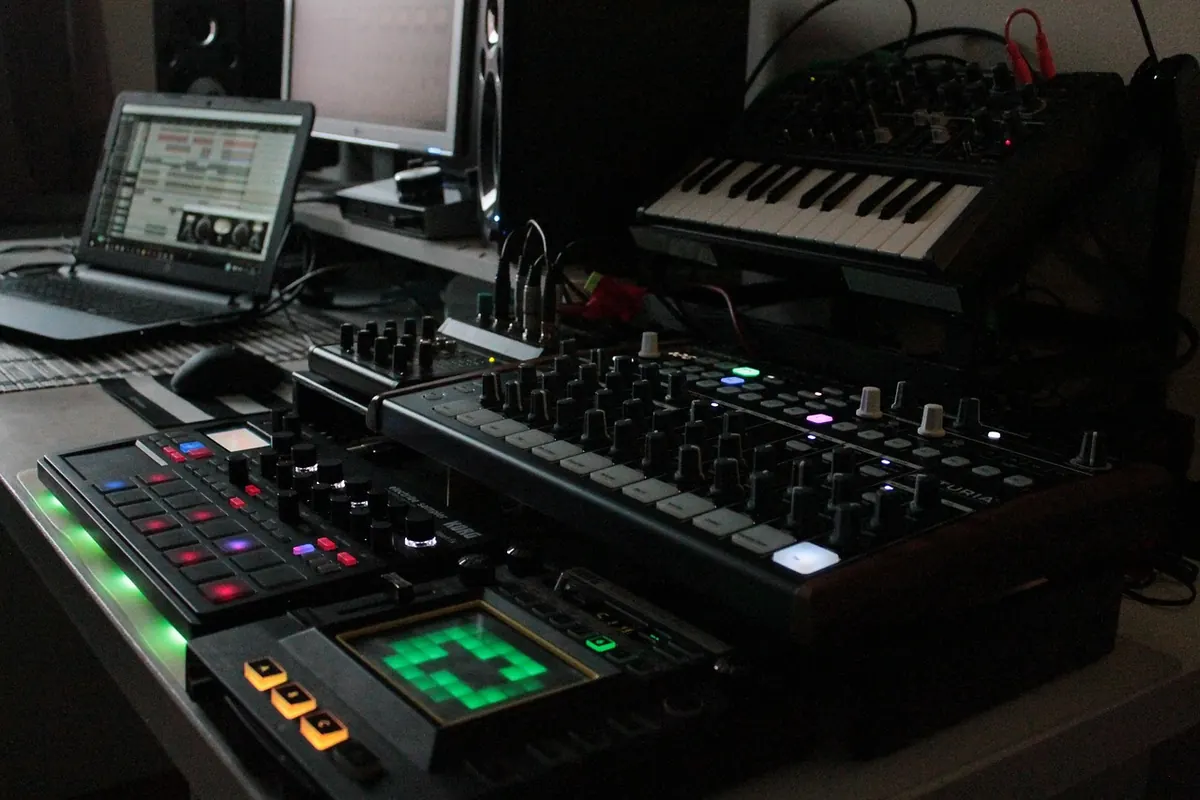
Open decks nights are the least intimidating door into the scene and the most misunderstood. The traditional format is simple: a sign-up sheet, slots of ten to twenty minutes, and a room that fills up gradually as the night goes on. Plenty of these nights started out DJ-focused, but a growing number now welcome live sets — a hardware sequencer, a sampler, a laptop and controller, whatever gets your beats out of the bedroom.
A few things make the difference between a decent slot and a wasted one. Prepare two short sets rather than one long one, so you can adapt if the room is half-empty or unexpectedly full. Export your material in more than one format — a USB in your DJ software's native format plus a plain folder of WAVs has rescued more sets than any clever transition. Bring your own headphones and a jack adapter. Get there at doors to put your name down, watch how the sound engineer works, and keep your levels sane; nobody remembers the person who pushed the master into the red.
Etiquette matters more than technical polish. Thank the host, stay for the other sets instead of playing and leaving, and don't touch the house settings. If someone's track lands, tell them — that single sentence is how most collaborations in this city begin.
Meetups, workshops and critique nights
Between the formal programmes and the club nights sits an informal layer: Discord and Meetup groups for specific DAWs, hardware jam sessions, sample-flip challenges, and open studio evenings where people bring half-finished work. These are worth more than they look. A room of eight producers who each give you one specific, honest note will move a track further than another month of solitary tweaking.
What you bring matters. Turning up with a finished track and asking for general thoughts usually gets you polite nods. Turning up with a thirty-second loop and one clear question — "the low end disappears on small speakers, what would you change?" — gets you a real conversation. Bring both if you can: something complete to show you finish things, and something broken to show you're still working. Keep your files organised enough that you can pull up a project without apologising for six minutes of loading screens.
A word on the first visit
Go alone if you have to. Groups of friends tend to talk to each other, and the whole point is meeting people you don't already know. Aim for two conversations rather than ten introductions, and follow up within a day or two while the memory is fresh.
Radio, labels and the ecosystem around them
Community radio is one of Manchester's quiet strengths, and shows are often short of guests. Offering a well-prepared mix or a live set is a far better opening message than asking for a slot. Independent labels here are usually run by people who also DJ the same nights you're attending, which means the relationship matters as much as the demo — send a cohesive EP rather than a scattered folder of tracks, and be specific about what you want from them.
Don't overlook the people around the music: mastering engineers, photographers, videographers and promoters. A good working relationship with a mastering engineer who understands your genre is worth more than another plug-in bundle.
A realistic first month
- Pick two events and actually go. One open decks night, one workshop or meetup.
- Send three messages a week — to a night's host, to a producer whose track you liked, to a venue you'd like to play.
- Split a studio session with one other producer and finish something rough, together.
- Play that track out, even to twelve people. Feedback in a room beats feedback on a screen.
- Volunteer once: help with set-up, door, or recording a live stream. This is how you get asked back.
Making it stick
Consistency beats intensity here. One night a month, every month, for a year will teach you more and introduce you to more people than a fortnight of frantic networking followed by nothing. Keep a simple note of who you met and what they're working on, so your next message has something real in it. Be useful without expecting a return, and don't treat every conversation as a pitch.
Manchester rewards people who show up, listen, and quietly help carry the speakers at the end of the night. The scene is small enough that reputation travels — which is exactly why it's worth building properly.
Photo: TemperateSage / Pixabay