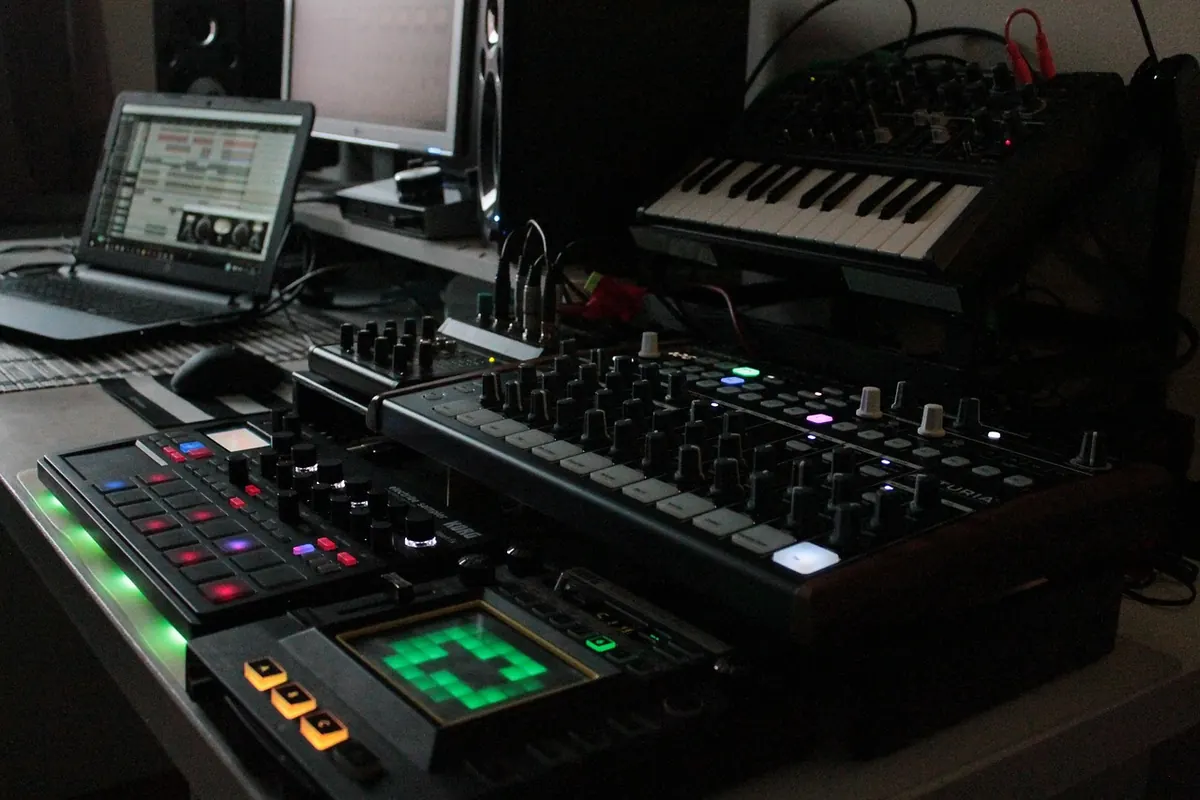
Two producers sit down to make a track. One switches on a box with sixteen pads and a screen the size of a matchbox. The other opens a laptop and sees a piano roll running off towards infinity. Both finish the tune. Neither could easily swap places.
The hardware-versus-software argument usually gets framed as a rivalry, and that wastes energy. A drum machine and a DAW are different instruments with different strengths, and the producer who understands what each one does well makes better records than the one who picks a side.
Two Different Kinds of Constraint
Strip it back and the real difference is what you can't do.
A hardware drum machine gives you a fixed set of voices, a fixed pattern length, and a handful of knobs. You can't see every parameter at once. You can't undo a mistake three hours later. Everything is a decision, and the machine keeps that decision whether you like it or not. Buttons light up, a pattern plays, and you move on.
A DAW hands you an unlimited grid, an unlimited sample pool, unlimited takes and an editing depth no standalone box can approach. You can postpone almost every decision until the arrangement is finished.
Both are constraints, just shaped differently. Hardware applies pressure and forces commitment. Software gives you room to explore and revise. Which one you need depends entirely on the music in front of you.
Where a Drum Machine Pulls Ahead
Timing you can feel
Sequencers have their own clock character, and classic units don't lock to a grid the way a DAW does out of the box. Play pads by hand and let hits land slightly early or late, and you get movement that drawing on a 16-step grid rarely produces. A shaker that drifts by a few milliseconds sounds played. The same shaker quantised dead straight sounds printed.
Try this: record a two-bar pattern on the pads with quantise off, then listen back with the grid hidden so you're judging with your ears rather than your eyes. If it wobbles in a way you like, leave it alone. If it stumbles, quantise to around 60 per cent strength and keep some of that looseness intact.
Happy accidents
Twisting a decay knob while a pattern runs will occasionally throw up something you'd never have drawn deliberately. Because there's no undo, you keep it, and that pressure has produced a great many good records.
Playing, not drawing
Velocity, pad response, rolls played live. If your genre leans on groove and human touch, this is the whole point, and no mouse can fake it convincingly.
Where the DAW Pulls Ahead
Editing and arrangement
Arrangement is where software wins without a fight. Turning an eight-bar loop into a full track — filter automation, drops, fills, breakdowns — is slow work on a small screen and quick work in a session view. The same goes for per-hit edits: nudging one kick, pitching a single snare, swapping a hat without disturbing the rest of the pattern.
Recall
Reopen a session three months later and everything is exactly where you left it. If you take remix work, collaborate with a vocalist, or revise a track for a label, this is close to non-negotiable. Hardware sketches stored as audio files across four folders are a different story.
Layering and sound design
Stack a sampled kick, a synth kick and a click for the attack. Phase-align them so the low end doesn't cancel. Bus compress the result. You can do some of that on hardware, but you'll be doing it blind.
Genre Changes the Answer
House, techno, electro
These genres grew up around drum machines, and it shows. A one-bar pattern with the right swing, a punchy kick and a crisp open hat is often the whole engine. Start on hardware or a hardware-style step sequencer, then print to audio and arrange in the DAW.
Hip-hop and boom bap
Pad performance is central: chopping a break, replaying a kick, letting the swing come from your hands rather than a percentage field. An MPC-style workflow suits this beautifully. Move across to software once the groove is captured.
Drum & bass, jungle, UK garage
Break slicing, ghost notes, precise grid placement and fast rearrangement favour the DAW heavily. Use hardware for character — a filtered drum hit, a bit of grit — but do the surgery on screen.
Pop and topline-driven music
The drums serve the song. Arrangement, revision and mixing dominate, so stay in the box. The exceptions are moments where a live or hardware-played part adds texture under a dense vocal.
The Hybrid Workflow Most Producers Settle On
You don't have to choose permanently. A common setup looks like this:
- Sketch on hardware. Pads, swing, one or two patterns. Don't try to sync everything perfectly.
- Print to audio as soon as the groove feels right. Multi-track kick, snare and hats separately if you can, so you keep processing options.
- Do the arrangement and the bulk of the mixing in the DAW.
- Optionally send one or two elements back out through hardware for colour, then re-record them.
- Save a session template with your drum buses and processing already set, so the next idea starts fast.
Mistakes That Sink Either Workflow
- Buying hardware to fix a writing problem. A new box won't write the hook. If you're stuck, the issue is usually arrangement or melody.
- Refusing to print. A pattern that only exists as a live sync is a pattern you will lose.
- Quantising everything to 100 per cent. It flattens the performance you played the part for.
- Using each tool for what it's worst at. Chopping a break on a two-inch screen, or trying to perform a groove with a mouse, both take far longer than they should.
- Chasing gear instead of finishing tracks. Three finished tunes teach you more about your workflow than three new purchases.
Pick a Starting Point and Commit to It
Ask yourself two questions about the next track. Does it live or die on arrangement? Does it live or die on feel? If feel, start on hardware or a pad controller and print the groove early. If arrangement, start in the DAW and treat the drums as a programming job.
Then commit. Finish three tracks with that workflow before you change anything, because the first session with unfamiliar gear always feels clumsy. If you're borrowing or buying second-hand hardware, check the pads and encoders respond consistently before you build your process around it.
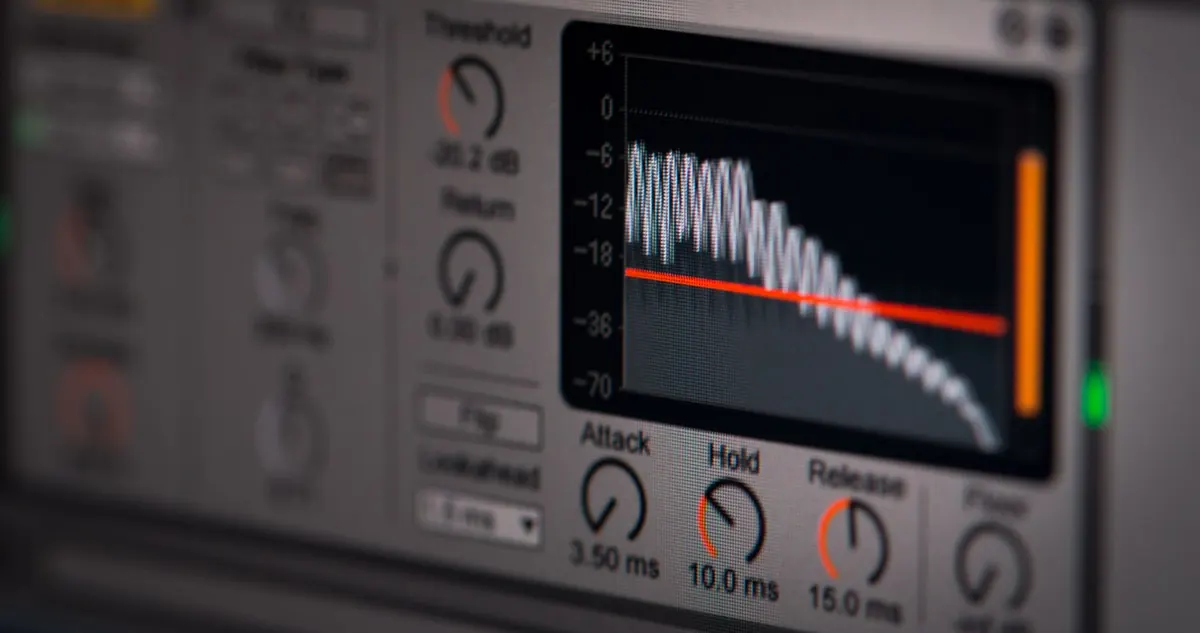
And if you don't own a drum machine, you can still borrow the good parts. Load your drum rack, turn quantise off, play the pattern in by hand, set your attack and release to vary with velocity, and resist tidying it up. That single change gets you most of the way to a hardware feel without spending a penny.
Photo: rotten77 / Pixabay